
What Is Litho Printing? A Plain English Guide
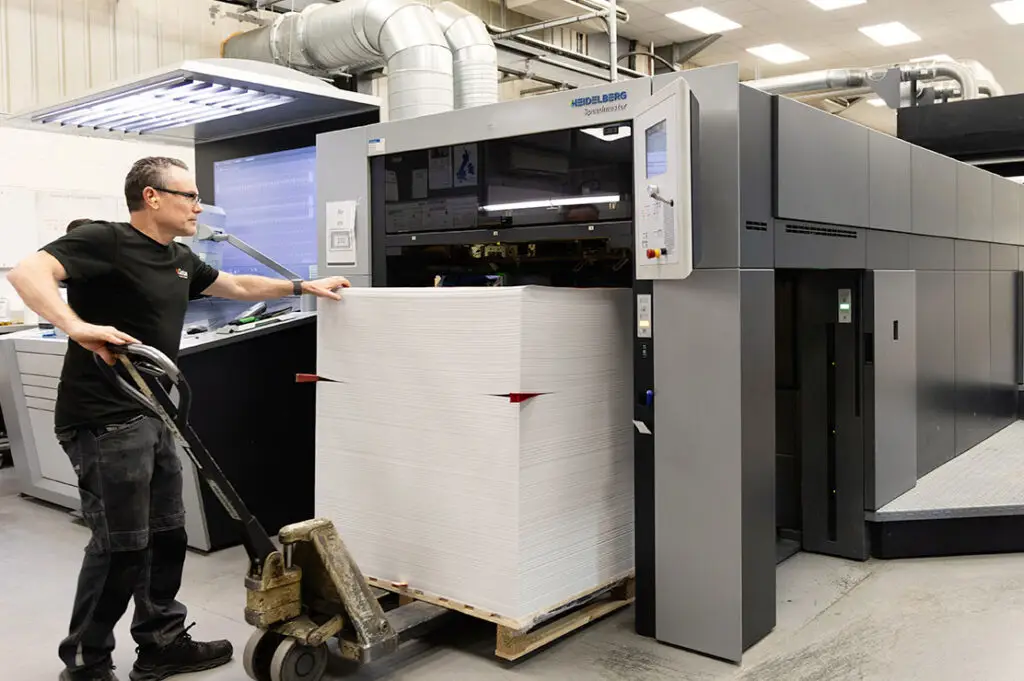
If you have ever requested a quote for printed cards, packaging or other paperboard products, you have likely come across the term litho printing.
In simple terms, litho printing is a highly efficient way of producing large quantities of consistent, high-quality printed material. It has become a standard choice for major print runs because, once the press is set up, it can produce very large volumes quickly and reliably.
That does not mean it is the right process for every job. Order size, product specifications and the economics of setting up the press all play a part.
In this short guide, we explain how litho printing works, why it is so effective at scale and where digital printing fits alongside it.
What is litho printing?
Litho printing, short for lithographic printing, is a printing process that uses specially prepared printing plates to transfer an image onto paper or board.
Rather than printing directly from a digital file onto the finished material, the artwork is first used to create a set of plates. Those plates form part of the printing process and allow the same design to be reproduced accurately again and again.
For high-volume work, that is a major advantage. Once the press is prepared and running correctly, it can produce hundreds of thousands, or even more, copies with a very high level of consistency.
That is why litho printing is commonly used for larger commercial print programmes, including high-volume paperboard card production.
How lithographic printing actually works
The easiest way to understand lithographic printing is to think of it as a staged process. First, the finished artwork is prepared for print. Then plates are created for the different colours needed in the design.
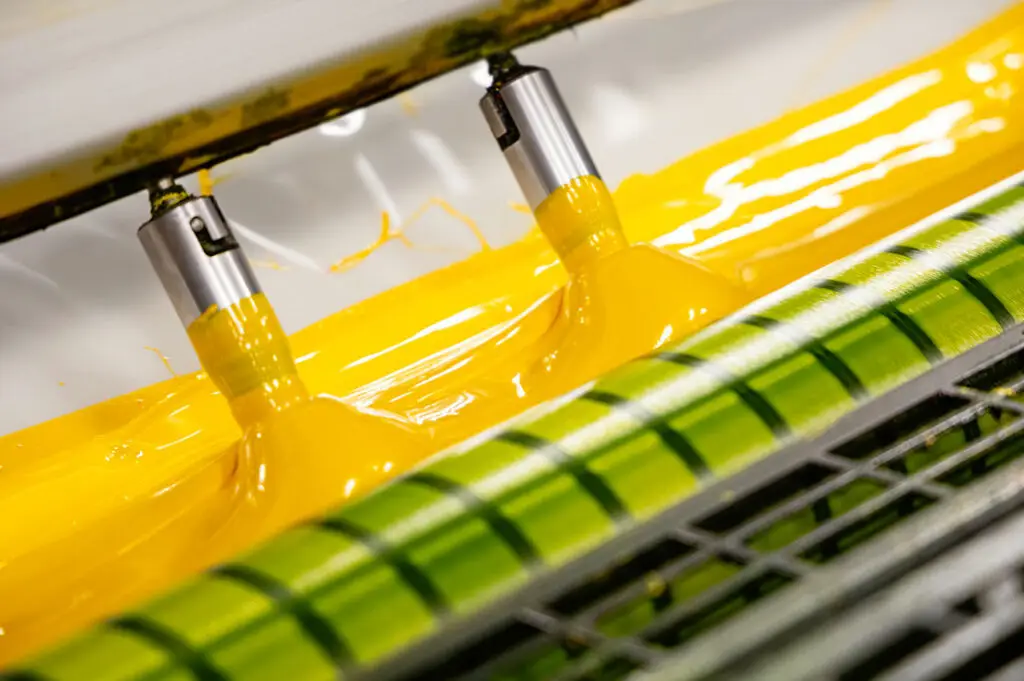
Most commercial colour printing uses four standard colours: cyan, magenta, yellow and black. These are often referred to as CMYK. By combining them in different amounts, the press can reproduce a wide range of colours and images.
The plates do not normally transfer the image straight onto the paperboard. Instead, the image is transferred from the plate onto a rubber-covered cylinder and from that cylinder onto the material being printed. This is why litho is also commonly called offset printing: the image is effectively transferred, or “offset”, before it reaches the final surface.
For the customer, the important point is not the machinery itself. It is what the process makes possible: fast, repeatable printing with strong colour consistency across very large quantities.
Why litho became the standard for large print runs
Litho printing makes the most sense when you can spread the setup cost across a large quantity of finished pieces.
Before the full production run begins, the press needs to be prepared. The correct plates have to be fitted, colours need to be set and adjusted, the material has to be loaded, and the press has to be checked until the finished result meets the required standard.
This preparation stage is known as make-ready. Make-ready takes time and materials, whether the final order is for 5,000 cards or 500,000 cards.
That distinction is important. If you spread the setup cost across hundreds of thousands of cards, the per-card cost becomes very small. On a much shorter run, the same setup cost is being divided across far fewer products.
This is one of the main reasons litho printing becomes particularly cost-effective at higher volumes.
At the largest end of the scale, a national retail programme may require hundreds of thousands of cards, or potentially a million cards across a campaign. At that volume, litho does exactly the job it was designed to do.
What litho does better than anything else
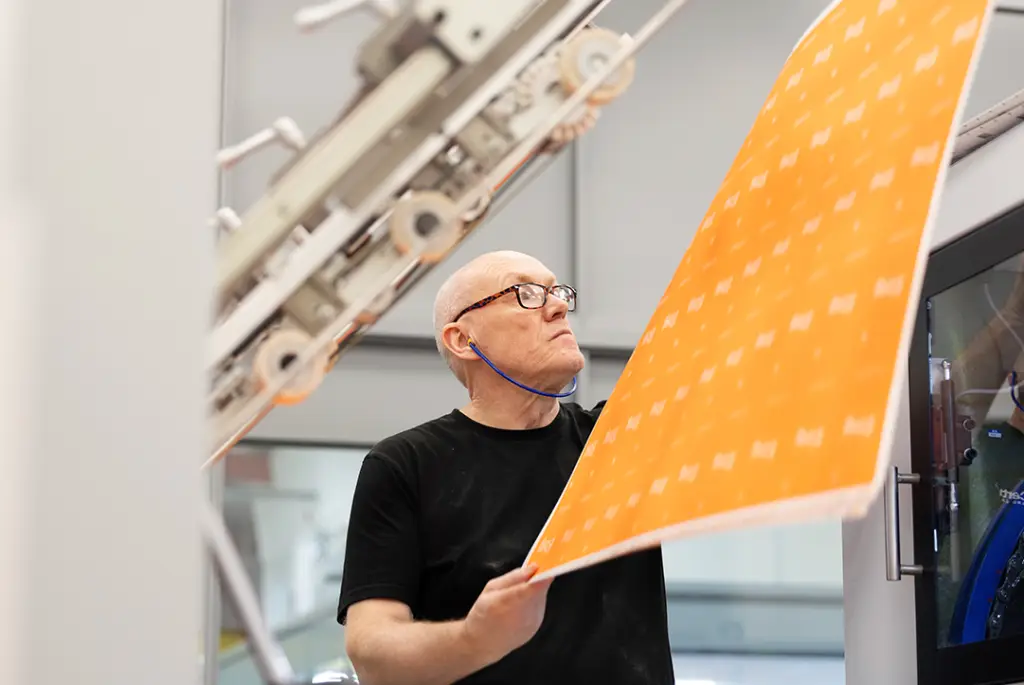
Litho’s biggest strength is scale. For a large, repeat order, it combines speed, quality and efficiency extremely well. Once the press is set correctly, it can keep producing large quantities with consistent results from one piece to the next.
That makes it especially well suited to large national programmes where consistency matters across every location. A business ordering hundreds of thousands of paperboard cards doesn’t just need the first few copies to look right. It needs the same colour, branding and print quality maintained throughout the whole production run.
Litho is built around that requirement. It is also a well-established process with a very broad range of applications, which is why it remains an important part of commercial print production.
For organisations with the volume to justify the setup, it is often the most logical and economical method available.
The catch: what happens on smaller runs
The same setup process that makes litho so effective at scale can work against it when quantities are much smaller.
Imagine two jobs using broadly similar artwork and materials. One requires 500,000 cards, while the other requires only 5,000. Both may still need plates to be produced. Both require the press to be prepared, and both involve make-ready before full production can begin.
On the 500,000-card job, those setup costs are spread across a very large quantity. On the 5,000-card job, they are spread across a much smaller one. As a result, the price per card can rise significantly on shorter runs, even if the final printed product is relatively simple.
This is also why comparing print quotations purely on the finished unit can be misleading. Part of the cost comes from the essential preparation process that must be completed before the first finished card is produced.
How digital printing differs
Digital printing removes much of that setup process. Instead of creating physical printing plates for each job, the press receives the artwork digitally and applies the image directly through a controlled digital printing process.
That changes the economics of shorter runs because there is less fixed setup to spread across the order.
It doesn’t automatically make digital the better option, just as a higher-volume litho press isn’t automatically the right answer for every job. The two processes suit different production requirements.
For shorter quantities, digital can make production commercially practical where a traditional litho setup may be difficult to justify.
So which one is right for your job?
No single volume or specification makes one process universally better than the other. The right choice depends on the job.
Quantity is a major factor, but it is not the only one. The material, artwork, finishing requirements, production schedule and future repeat orders may all influence which process makes the most sense.
For a national programme requiring hundreds of thousands of cards, litho may offer exactly the efficiency the project needs. For a smaller chain, independent business or one-off campaign requiring a few thousand, digital production may provide a more suitable route.
The important question is not, “Which printing process is best?” It is, “Which process is best for this particular job?”
How we use both at Certus
At Certus, litho and digital printing are not competing technologies. They give us different ways to produce paperboard products based on our customers’ needs.
Litho remains central to high-volume production and to the large-scale programmes it is particularly well suited to. Digital printing gives us another option for lower-volume jobs, where the economics of litho make less sense.
If you are planning a card project and are unsure whether litho or digital printing is the right fit, speak to the Certus team. We can review the quantity, specifications and requirements of the job and help you understand which production method makes the most sense.
One Response