
What to Consider Before Adding Data to a Card
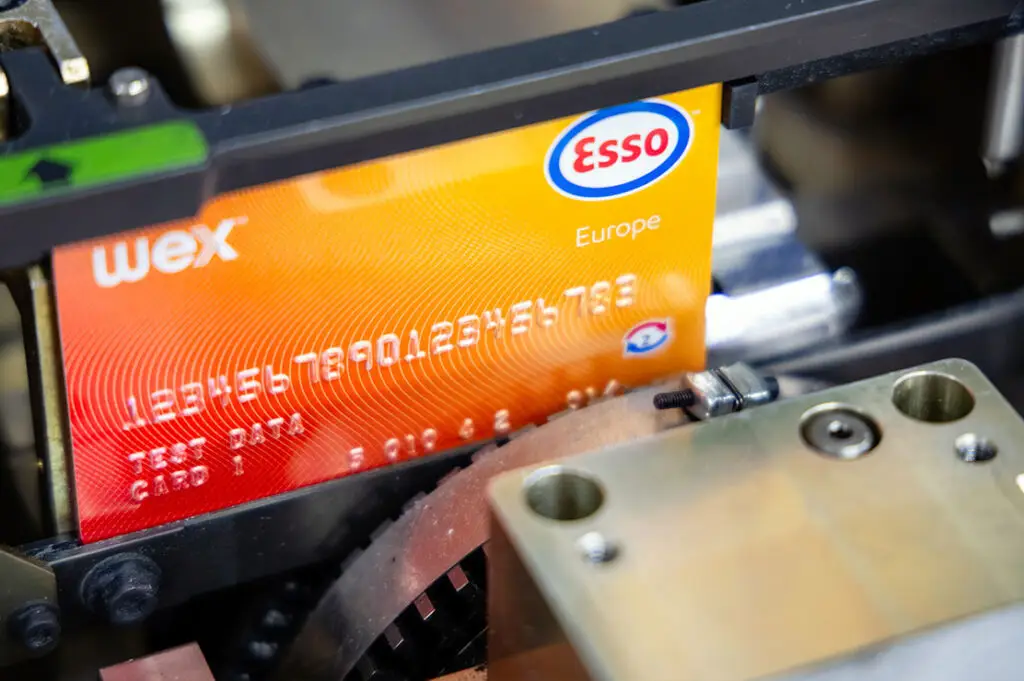
Barcodes, stripes, chips and getting the data right first time
At Certus Card Group, many of the card enquiries we receive arrive with the technology already decided. “We need RFID.” “It has to have a magnetic stripe.”
Most of the time our customers are exactly right, but in some cases, technology is requested without taking a second to ask if the technology is right or needed and the programme ends up paying for technology it never uses.
A better place to start is the card’s job and the reader it will meet. This guide walks through the main options for card personalisation, from printed codes to encoded chips, and what to check before any data goes onto a card.
Start with the job and the reader
Every piece of data on a card is there to be read by something: a scanner at the till, a lock on a door, a terminal at a fuel pump, or a phone. That reader decides much of what follows.
Before choosing a technology, it helps to answer a few questions:
- What will read the card, and is that system already in place?
- Does the card only need to identify someone, or does it need to store or exchange data securely?
- How often will it be used, and for how long?
- Will the data be known before production, or arrive over time?
If readers are already installed, the card has to match them, not the other way round. If you’re choosing a system at the same time as the cards, there’s more flexibility, and it’s worth involving your card manufacturer or data processor early.
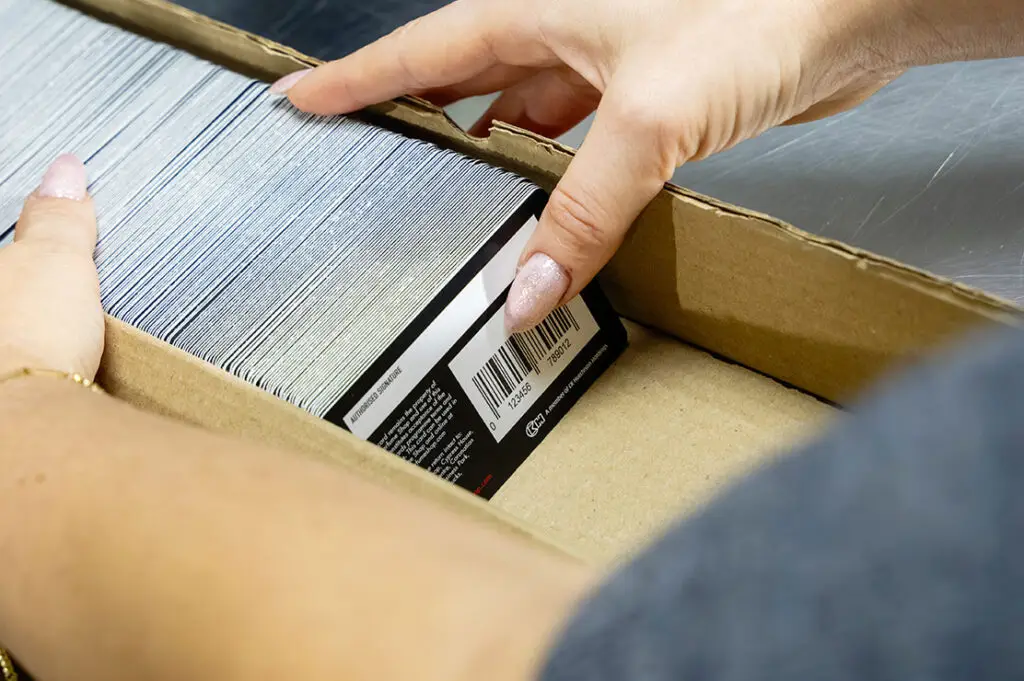
Barcodes and QR codes: when a printed code is enough
For many programmes, a printed code does everything required. Gift cards are typically activated and redeemed by scanning a barcode at the till. Many loyalty and membership cards only need to identify the customer, which a barcode or QR code does quickly and cost-effectively. QR codes can also point to a web page or app, which makes them useful when the card is the way into a digital programme.
Printed codes work on paperboard as well as PVC, need nothing more than a standard scanner, and can carry a unique number on every card. The trade-off is that anything printed can be seen and copied. Where a code carries value or grants access, think about how it’s protected, both on the card and in the carrier it’s sold or sent in.
Magnetic stripe: for swipe systems already in place
Magnetic stripe cards remain a dependable choice where swipe-based systems are already in use. Fuel networks, some loyalty schemes and established access control systems still rely on them, and replacing readers across a network is rarely a small job.
Magnetic stripe encoding writes data to the stripe during personalisation, so each card is ready to work with your system when it arrives. Stripes do have limits. They can wear with heavy use and are less secure than a chip. For a new programme without existing swipe readers, it’s worth asking whether a stripe is still the right choice.
Chip and contactless: match the chip to the reader
Smart cards carry an embedded chip that stores data and communicates with a reader. There are two main types.
- Contact chip cards have a surface-mounted chip that’s read when the card is inserted into a reader. They’re widely used for payment, prepaid, fuel and identification programmes, where direct communication with the reader is essential.
- Contactless cards use RFID or NFC to communicate by radio frequency, so the card only needs to be tapped or held near the reader. They suit access control, transport, membership and hospitality, where speed matters.
The most important rule is to match the chip to the reader. Chip types aren’t interchangeable, and a beautifully printed card with the wrong chip simply won’t work. As a MIFARE registered partner, Certus Card Group supplies MIFARE Classic 1K chips for systems designed to work with that format. For anything else, share your reader make and model, or the chip specification you use today, and we’ll match it.
RFID card encoding can also happen before delivery. Cards can be supplied pre-encoded, so they work on arrival and your team doesn’t have to programme each one. The same principle applies to access cards and hotel key cards: confirm the lock or access system first, then specify the card around it.
When the data goes on
Data can be applied at two broad stages. The right one depends on when your data is ready and how unique each card needs to be.
During production. Variable data such as numbers, names and barcodes can be applied during digital printing, before the printed sheets are laminated and cut into cards. This suits programmes where the data for every card is known in advance.
After production. Finished cards can be personalised on demand at our secure Skelmersdale site. This suits photo ID cards, daily issue for new members and programmes where data arrives in regular files.
Our card personalisation capabilities cover variable text and numbering, barcodes and 2D codes, magnetic stripe encoding, thermal and re-transfer printing, inkjet and drop-on-demand printing, and NFC and encoded contactless elements. Each method is chosen to work with the system the card will meet, whether that’s a checkout, an access point, a fuel network or a loyalty platform.

Getting the data right
Most personalisation problems start with the data file rather than the card. Customer data is usually structured for internal systems, not for production, so it often needs work before it’s ready to print or encode.
Our secure data services team validates, formats and prepares data before it goes into production, for one-off files and for ongoing programmes with regular or daily data feeds. To keep things moving, it helps to:
- Share a sample data file early, before artwork is finalised.
- Agree the format of every field, including names, numbers and codes.
- Confirm how each record matches to its card, carrier or letter.
Once data is applied, camera verification checks that it’s correct and consistent across every card and carrier. That reduces the risk of errors and supports traceability if a question comes up later.
Security runs through the whole process. Data is handled at our Skelmersdale site within controlled environments, with restricted access and defined workflows. Our ISO 27001 and Cyber Essentials Plus certifications provide independent assurance of those controls.
Where a programme uses PINs, the card and PIN should be kept apart. We support traditional split-mail, where the card and PIN are sent separately, and secure digital PIN delivery through Ostium, which can replace physical PIN mailers altogether.
Decide first, then personalise
The right technology is the one that suits the reader and the job, not necessarily the one written into the first enquiry. Start there, get the data ready early, and personalisation becomes one of the most reliable parts of the programme.
If you’re planning a new programme, or reviewing how data is applied to your current cards, book a consultation and our team will help you choose the right approach.
One Response